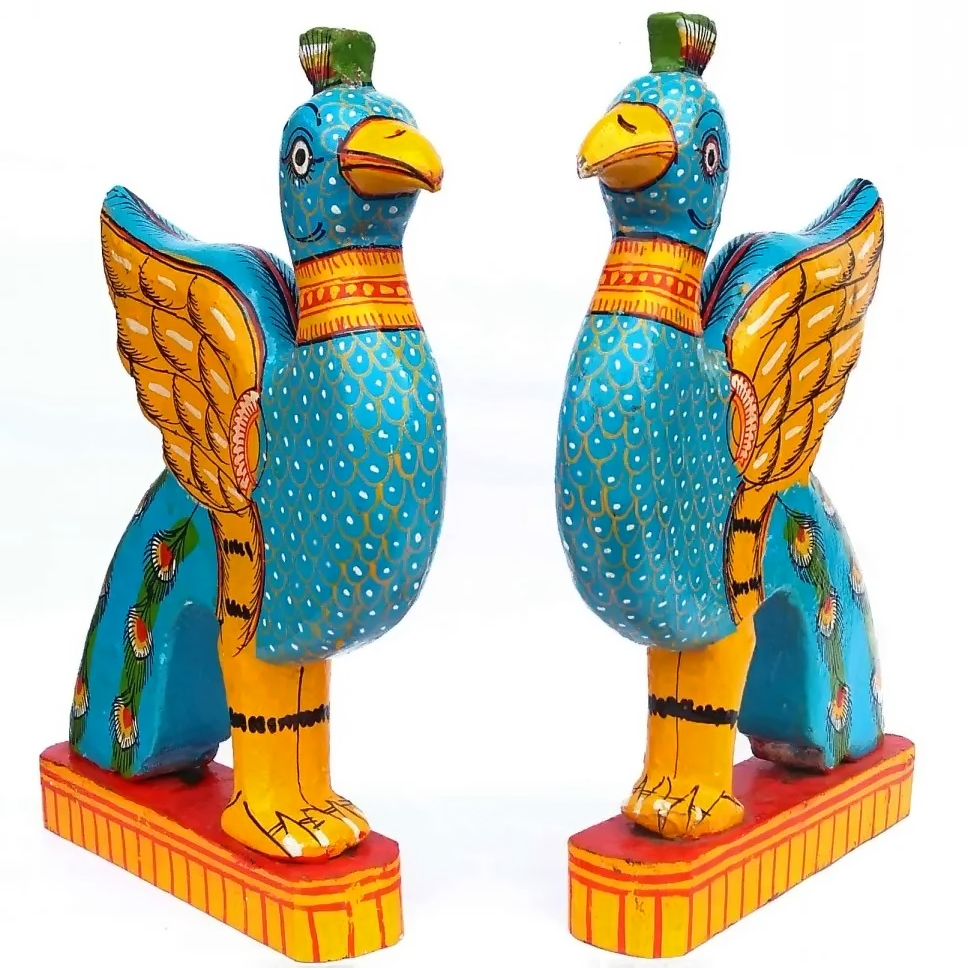
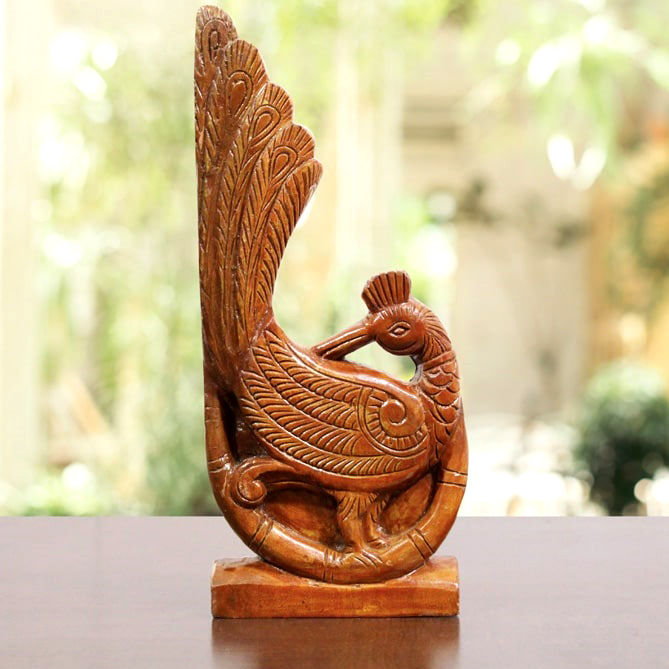
Historical Background: Wood carving in Odisha is deeply rooted in the state’s tribal culture and religious traditions. This craft has evolved over centuries, with artisans creating everything from temple doors to furniture, often based on mythological and tribal motifs.
Process: Wood carving in Odisha involves selecting high-quality wood, typically from sal or teak trees, known for their durability and fine grain. The first step is to prepare the wood by cutting it into manageable pieces. The artisans then begin by sketching the design onto the surface, which is often inspired by religious themes, nature, or tribal art. Using a range of chisels, knives, and gouges, they meticulously carve the wood, removing layers to reveal the desired shape. The detailing process is extremely intricate, with fine lines and patterns being etched into the wood. Once the carving is complete, the piece is polished using natural oils or waxes to enhance its sheen and texture. In some cases, the wood is painted or lacquered to bring out additional visual effects. The result is a functional yet artistic piece, whether it’s a sculpture, furniture, or decorative item, that showcases the rich tradition of woodwork in Odisha.
Current Demand: Wood-carved items are in demand for both religious purposes and as luxury home décor. Carved wooden furniture, temple doors, and idols are popular, especially among those seeking traditional, handcrafted products.
Historical Background: Originating in the 12th century, Pipili craft is an integral part of the Jagannath temple tradition. The craft was initially used to make decorative umbrellas and items for temple processions.
Process: The process of Pipili appliqué work starts with selecting colorful fabrics, typically cotton or silk, which are cut into various shapes such as flowers, animals, and religious symbols. The designs are first drawn onto a base cloth, which is typically a large piece of canvas or cotton. Artisans then carefully cut out the shapes and stitch them onto the base cloth using a special stitch known as “katti” (backstitch), ensuring that each piece is securely attached. The shapes are arranged in elaborate patterns, often featuring geometric designs and vibrant motifs. The artisans also use natural dyes to color the fabrics, which adds richness to the finished pieces. Once the stitching is complete, the piece is framed or turned into items like umbrellas, wall hangings, or lampshades. The finished product reflects the culture and vibrant traditions of Odisha, often used in festivals and temple processions.
Current Demand: Appliqué items are in high demand for both traditional festivals and as decorative items for homes and businesses. Its vibrant colors and intricate patterns make it a favorite for fashion and home décor.
Locations: Ranipur (Bolangir), Butupali (Boudh), Pipili (Puri), Bhakarasahi (Khurda), etc.